How to Identify Postage Stamps: The Clues Worth Checking
Postage stamps are small, but many of them carry evidence about where they came from and how they were made. Some of that evidence is easy to read at home, and some of it needs a specialist. This guide covers the clues that published sources describe: a rule for spotting British issues, what ragged edges say about early stamps, how engraved printing can be recognised, what perfins are and why secret marks matter. It also covers the mistakes that send beginners the wrong way and the point at which an expert opinion is the sensible next step.
Quick answer: Start with the clues that sources support: a monarch's head with no country name points to the United Kingdom, ragged torn edges suggest an early hand-separated issue, and fine raised lines indicate engraving. Note any perfins, and ask an expert about possible secret marks or anything unclear.
What postage stamps can and cannot tell you
A postage stamp is a receipt for prepaid delivery. Its design was never meant to be a full record of the item. Some facts are printed plainly, while others need specialist knowledge to read. Knowing which is which saves a lot of wasted effort.
The adhesive stamp most people can name is the Queen Victoria one penny black [2]. It set a pattern that British issues still follow: a royal portrait in place of a country name. Other countries took up stamps in their own ways. As mail crossed more borders, postal services needed common arrangements. The Universal Postal Union, established in 1874 [1], gave them a shared framework for handling each other's letters. That is part of why a letter from abroad could be delivered by a service that had never seen its stamps before.
This guide sticks to clues that published sources describe and that you can use without special equipment. They are the missing country name on British issues, ragged edges on early stamps, the raised lines of engraving, perfins and secret marks. The guide does not try to cover every route to an identification. Denominations and currencies have their own guide, How to identify a postage stamp denomination. Anything the clues below cannot settle is a question for an experienced collector or a stamp society.
The one country that leaves its name off
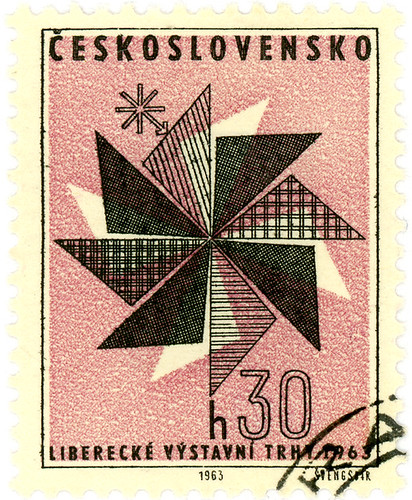
Almost every issuing country puts its name on its stamps, which makes one exception very useful. The United Kingdom remains the only country to omit its name on postage stamps, using the reigning monarch's head as country identification [1]. A stamp that shows a king or queen and carries no country name at all is therefore most likely British.
The portrait is not always large. On some designs it is the main image. On others it is a small profile set into a corner beside a landscape, a building or an event. Either way the rule works the same: the head stands in for the name.
The rule also works in reverse. Britain is the only country that leaves its name off, so a monarch's portrait that sits beside a printed country name is not a British issue. Several countries that share or once shared the British monarch have shown the royal head on their stamps. Their printed names are what separate them from the United Kingdom.
What the rule cannot do is pin down exactly which British issue you have. British stamps span many decades and many designs, so for anything more precise than the country, take the stamp to a collector or society member who knows British issues well.
Tip: When sorting a mixed bundle, make one pile of every stamp that shows a royal head and no country name. The United Kingdom is the only country to do this [1], so that pile gives you a quick first grouping by country and leaves a smaller remainder to work through. How to collect stamps by country and theme covers how to arrange a collection this way.
Ragged edges and the earliest issues
The earliest stamps were printed in sheets with no built-in way to separate them. Post office clerks and customers had to divide them by hand, and the evidence of how they did it often survives. If cutting tools were not used, individual stamps were torn off. This is evidenced by the ragged edges of surviving examples [1].
In practice, a stamp with uneven, torn edges may have been pulled from a sheet in this way. That fits the early period, when separation was done by hand, so note it before you go further.
A ragged edge is a hint, not proof. Stamps from any era can be torn carelessly, and an edge damaged in an old album or scrapbook also looks rough. Read this clue together with the others in this guide. If the age of a stamp matters to you, have an experienced collector look at it.
Warning: Never trim a rough edge to make a stamp look tidier. The tear is part of the stamp's evidence, and cutting it away removes something an expert would want to see. Collectors treat trimming as damage, and a trimmed stamp can lose much of the value it would otherwise have had.
Store stamps with ragged edges flat, in a stockbook or a paper envelope, so the loose fibres along the tear are not bent or rubbed away.
Raised lines and engraved printing
Engraving, also called recess printing, starts with a design cut by hand into a metal plate. The cut lines hold the ink, which transfers to the paper under pressure and leaves lines that stand slightly above the surface. Postal services valued the method for security as well as appearance, because it was nearly impossible to counterfeit a finely detailed image with raised lines for anyone but a master engraver [1].
This gives you a check you can use. A portrait or frame made of very fine, crisp lines that stand slightly above the paper points to engraving.
Engraving was not the only way stamps were printed. Telling the other methods apart reliably takes experience and often equipment. If the printing method decides which issue you have, leave the call to an expert.
The security side of engraving matters too. Fine raised lines were very hard to copy. So if a stamp comes from an engraved series but its lines look coarse, broken or blurred, have someone who knows the issue examine it. It may simply be a worn or poorly inked example, but it may also be a copy, and only an expert can say which.
Handle engraved stamps by the edges, ideally with stamp tongs, so you do not leave finger marks on the printed surface.
Perfins: holes that spell letters
Some stamps in old accumulations have a cluster of small holes through the middle of the design. These are stamps perforated across the middle with letters or a pattern or monogram. They are known as "perfins" [1]. Firms and public offices punched their initials or a symbol into the stamps they bought, so that staff could not take the stamps for private use.
A perfin does not change the country or the basic issue of a stamp. It does make the stamp a distinct item. Some collectors build whole collections around perfins, sorting them by initials or pattern and tracing which firm or office used each one.
The common mistake is to treat a perfin as damage and throw the stamp away. A neat group of holes forming letters is deliberate. Keep the stamp and note what the letters or pattern appear to be.
If you want to know who used a particular perfin, ask a specialist society. Groups that study perfins keep records and can often help.
Secret marks and stamps that look alike
Some differences between stamps are hidden on purpose. Collectors warn that ordinary-looking items can be expensive if they wear a so-called secret mark [2]. Printers sometimes added a tiny dot, a short line or a slightly altered letter to a printing plate. Often the aim was to tell one printing from another while the design stayed the same.
This is why a stamp that looks familiar can still turn out to be something less common. Two stamps can share the same design, colour and subject and still belong to different printings. Those printings can have different listings and very different values.
Secret marks are hard to find by design. They are small, they sit inside busy parts of the image, and the stamps carrying them were made to look like everything else. For that reason it is not sensible to try to confirm one by eye alone. Suppose you have a common-looking stamp from a series known to have secret marks. Show it to an expert or a specialist society before you assume it is the ordinary version, and certainly before you sell or swap it.
Keep stamps of the same design together rather than splitting them up. An expert can then review the whole group in one sitting.
Unusual issues and other questions to settle
Not every postal issue is a paper rectangle. Postal services have tried odd shapes and materials. One well-known example is the set of small playable records issued by Bhutan in 1973 [1]. Items like these show how far the idea of a stamp has been stretched. Because of that, do not throw away a strange piece just because it looks more like a souvenir than a stamp. Keep it with your other stamps, note where it came from, and put the question to an experienced collector or a stamp society.
Other questions come up once the basic identification is done, and each one has its own guide on this site:
- Whether a design was an everyday issue or a one-off for an event: How to identify commemorative versus definitive stamps.
- The difference between unused stamps and stamps that have been through the post: what used versus mint means for stamps.
Keep these questions separate in your notes. Knowing the country does not tell you the issue, and knowing the issue does not tell you the variety. Each step needs its own answer.
A quick reference to the clues
The table below gathers the clues from this guide in one place. It also shows the point at which each clue stops being enough on its own. Every row is a starting point, and none of them identifies a specific issue by itself.
| Clue | What it suggests | When to ask an expert |
|---|---|---|
| Monarch's head with no country name | A British issue | When you need to know the exact issue |
| Ragged, torn edges | Separated by hand from an early sheet | When the age of the stamp matters |
| Fine, slightly raised lines | Engraved printing, which was hard to counterfeit | When lines look coarse or a forgery is possible |
| Letters or a pattern punched through the middle | A perfin used by a firm or office | When you want to trace who used it |
| Tiny added dot, line or altered letter | A possible secret mark and a separate printing | Always, before assuming value |
The first row rests on the rule that the United Kingdom is the only country to omit its name [1]. The next three rows come from the history of how stamps were separated, printed and protected [1]. The last row reflects the warning about secret marks [2]. Hand the stamp to someone with specialist knowledge when two rows point in different directions, or when nothing in the table fits.
Common mistakes when identifying postage stamps
Most wrong identifications come from a few repeated errors:
- Naming the country from the picture. A portrait of a composer or a view of a foreign city says nothing about which country issued the stamp.
- Assuming every royal portrait is British. Only a monarch's head with no country name points to the United Kingdom [1]. A portrait beside a printed name belongs to the country named.
- Taking a ragged edge as proof of age. Torn edges fit the early period [1], but stamps of any age can be torn.
- Throwing away perfins as damaged. The holes are deliberate, and some collectors look for these stamps.
- Assuming a common design means a common stamp. A secret mark can make an ordinary-looking item valuable [2].
- Guessing instead of asking. When a clue is unclear, a stamp society will usually give a better answer than a confident guess.
Warning: Do not write identification notes on the back of a stamp, and do not trim it to make it look better. Both can damage the paper or remove evidence, and the loss of value is permanent. Keep notes on a separate card or in a digital record instead.
When to ask an expert, and a faster first pass
Take your notes along with the stamp when you ask an expert. For each clue in this guide, write down what you saw. Note whether there is a royal head with no country name, what the edges look like, whether the lines seem raised, any perfin letters, and any detail you suspect could be a secret mark. That record makes a conversation with a dealer or a society member quicker, and it shows which questions are still open.
Local and national stamp societies, specialist dealers and experienced collectors are the usual places to go. Many societies hold meetings where members look at one another's stamps. If a stamp may be valuable, or may be a forgery, get a formal expert opinion rather than an informal view.
Identification and valuation are separate jobs. Knowing the exact issue is where valuation begins, not where it ends. How to determine stamp market value explains what else affects what a stamp is worth.
You may want a quicker first reading before you approach an expert. Stamp Identifier can suggest an identification from a photo, including the country and issue details. It also gives an estimated value as a starting point for research. Treat that estimate as a guide only. It is not an insurance appraisal or a guaranteed sale price, and the condition and exact variety still need confirming. To weigh it against other tools, see this comparison of stamp identification apps.
Common questions
- Why does my stamp have no country name on it?
- If it shows the head of a king or queen and you can find no country name, it is most likely British. The United Kingdom is the only country that leaves its name off, and it uses the monarch's head instead. If there is no royal portrait, an experienced collector or stamp society can usually help.
- How can I tell whether a stamp is an early issue?
- Ragged, torn edges can suggest the stamp was pulled by hand from a sheet, as the earliest issues were. Neither that nor any other single clue settles the date, so ask an expert when the age matters.
- What are the small holes that spell out letters in the middle of some stamps?
- Those are perfins. Businesses and public offices punched their initials or a pattern into their stamps so that staff could not take them for personal use. They do not change the basic issue, but collectors record them as distinct items.
- Can two stamps that look identical be different issues?
- Yes. Printers sometimes added tiny secret marks to tell one printing from another, so stamps that look the same at a glance can have different listings and values. If the difference could matter, ask an expert to confirm which version you have.
- Does identifying a stamp tell me what it is worth?
- Not on its own. Identification tells you which issue you have, and valuation is a separate step. Treat identification as the starting point, and ask an expert before relying on any figure.